
The scent of pencil lead and the faint metallic tang of old graphite linger on my drafting table while I examine the blueprints of the human face. It is 2026 and the biology of aging has finally been mapped as a series of load-bearing failures rather than a simple cosmetic decline. This article provides an authoritative analysis of dermal restoration techniques. Note that this information is for educational purposes only. Always consult with a board-certified medical professional before undergoing clinical procedures as individual biological responses vary and complications can occur in high-stakes aesthetic interventions. If you look at your face and see settlement cracks, you are not seeing a skin problem. You are seeing a structural deficit in the foundation of your biological envelope. Most people try to paint over the cracks with expensive creams. That is like painting a house while the joists are rotting. To truly address the issue, we must look at the microscopic mechanics of the skin and the neuro-muscular signals that drive the collapse. The BLUF is simple: effective wrinkle reduction requires a combination of neuro-modulation, volume replacement, and metabolic support for the extracellular matrix. Surface treatments are merely aesthetic dust covers.
The microscopic architecture of the synaptic gap
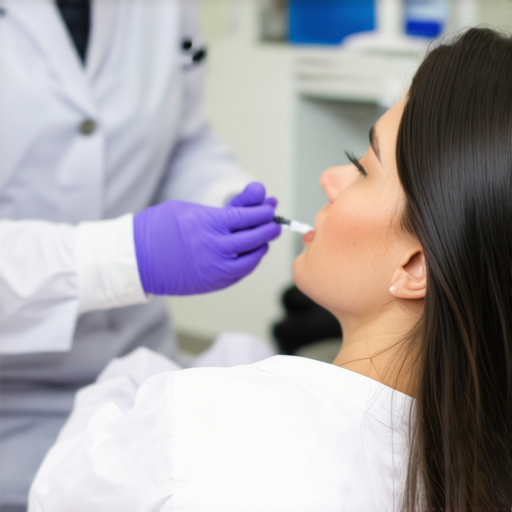
When we look at the face, we see expressions. I see electrical loads. Every time you squint against the Tampa sun while driving down Bayshore Boulevard, your brain sends an electrical signal down the facial nerve. This signal reaches the motor endplate. There, tiny vesicles filled with acetylcholine wait to be released into the synaptic cleft. This is a complex biochemical dance involving SNARE proteins that facilitate the fusion of the vesicle with the cell membrane. In a young face, the skin has enough elastic modulus to bounce back from this contraction. As the decades pass, the structural integrity of the collagen fibers fails. The muscle keeps firing. The skin keeps folding. Eventually, the crease becomes permanent. This is where early botox treatment becomes the primary structural intervention. By introducing a purified neurotoxin, we effectively disconnect the electrical circuit. The muscle relaxes. The skin stop folding. The settlement cracks have a chance to fill in through natural cellular turnover. We are not just freezing a face. We are reducing the mechanical load on the biological facade. This prevents the deepening of lines before they become permanent architectural scars in the dermis.
Clinical Reading List
- Best Wrinkle Treatment in Tampa 2026 Patient Results
- 7 Proven Ways to Look Younger with Botox in South Tampa
- How to Reduce Wrinkles Fast A 2026 Guide for Floridians
The failure of the dermal foundation in the Florida climate
In South Tampa, the environment is a constant stressor on the skin structure. The humidity is high but the UV index is higher. High energy visible light penetrates the epidermis and reaches the fibroblasts. These are the cellular workers responsible for building the collagen scaffolding. When UV photons strike these cells, they trigger the release of matrix metalloproteinases. These are enzymes that literally eat your foundation. They break down the type I and type III collagen that provides the tension and lift we associate with youth. The result is a thinning of the dermal layer. The skin begins to drape poorly over the underlying muscle and bone. When patients ask how to reduce wrinkles fast, they often ignore the environmental load. You cannot fix a building while it is under a constant tectonic shift. We must use high-concentration antioxidants to neutralize these enzymes while simultaneously using injectable fillers to restore lost volume. Think of dermal fillers as new load-bearing pillars. They are made of cross-linked hyaluronic acid. This molecule acts as a biological sponge. It holds a thousand times its weight in water. By injecting it into the deep fat pads of the cheeks or the hollows of the temples, we provide a lift that no cream can match. We are restoring the original blueprint of the face.
The friction between generic wellness and clinical reality
I find it frustrating when people rely on influencer-science. They buy serums with names they cannot pronounce and expect a miracle. The molecular weight of most topical collagen is too large to pass through the stratum corneum. It just sits on top of the skin like wet paper. It provides a temporary illusion of smoothness but does nothing for the structural fatigue below. If you want results, you must use medical-grade interventions that bypass the barrier. This includes micro-needling which creates controlled micro-injuries. These injuries trigger the wound healing response. The body rushes to the site to repair the “damage” by creating new, organized collagen. This is a deliberate system exploit. We are tricking the body into repairing itself. For men, this process is even more specific. We see a rise in brotox for a sharp look among professionals in Hyde Park and Davis Islands. Men have thicker skin and stronger facial muscles. They need a different dosage and a different injection pattern to maintain a rugged but refreshed appearance. The standard approach fails because it ignores the sexual dimorphism of the human skull and muscle structure.
The evolution of maintenance protocols from legacy to 2026
In the old days, people waited until they were fifty to seek help. They wanted a facelift. That is a salvage operation. In 2026, we focus on preventive maintenance. We use small amounts of neuro-modulators to prevent the cracks from forming in the first place. We also use bio-stimulators that encourage the body to produce its own filler over time. This is the difference between a quick patch job and a total structural retrofit. Many people also struggle with specific issues like lip filler tampa fl requests where they want volume without looking overfilled. The key is understanding the proportions of the face. A good architect knows that scale is everything. If the lips are too large for the jawline, the entire facade looks off. We look for symmetry and balance. We look for the golden ratio. Here are some frequent questions I hear at the clinic. Does it hurt? We use topical numbing and very small needles. Most people say it feels like a tiny pinch. How long does it last? Botox usually holds the line for three to four months. Fillers can last a year or more depending on the site. Is it safe? When performed by an expert like Dr. Hermann, the risks are minimal. The most common side effect is minor bruising. Will I look like a robot? No. We aim for natural movement. We want people to notice you look rested, not that you had work done. Can I go back to work? Yes. There is almost zero downtime for most wrinkle fixes. What if I hate it? Most fillers can be dissolved with an enzyme called hyaluronidase. It is reversible architecture.
Building a future that lasts
Your face is the only structure you will never move out of. It deserves more than a surface-level patch. It deserves a deep, metabolic understanding of its needs. As we move further into 2026, the technology only gets better. We are seeing new peptides and better cross-linking in fillers. We are seeing more precise ways to deliver active ingredients. But the core principle remains the same. You must respect the biology. You must support the foundation. If you are ready to stop painting over the cracks and start fixing the structural integrity of your skin, it is time for a professional assessment. Your blueprint is waiting for a revision. Don’t let the settlement cracks become the story of your face. Build something that stands the test of time and the Florida sun. Contact our South Tampa office today to schedule your structural consultation. We will analyze your facial load-bearing points and create a custom plan to keep your foundation strong and your facade flawless. It is time to invest in your primary residence. Your face.