The Fine Art of Structural Maintenance
The smell of beeswax and linseed oil usually fills my morning, a quiet reminder that anything worth keeping requires a steady hand and an eye for the grain. In my workshop, I see how wood responds to stress, it warps, it splits, and it reveals its history through every fiber. The human face is not much different from a piece of fine mahogany. It carries the weight of every expression, every squint against the bright South Tampa sun, and every laugh shared over coffee in Hyde Park. When people talk about bunny lines, those diagonal creases that fan out across the bridge of the nose, they often treat them like minor scuffs. I see them as structural stress fractures in the biological finish. Before we proceed with this analysis of neuromuscular intervention, we must establish a clear boundary. This content is for educational purposes and does not constitute medical advice. Any pharmaceutical intervention, including neurotoxins, involves risks such as bruising, asymmetry, or localized weakness. You should consult a qualified professional like Dr. Anne Hermann to evaluate your unique anatomy and history.
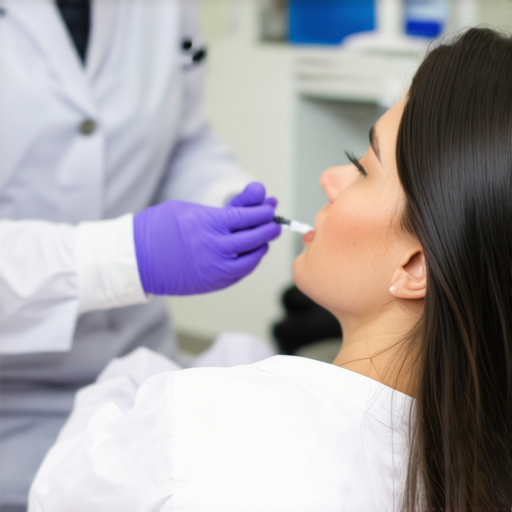
Editor’s Take: Bunny lines are dynamic wrinkles caused by the over-activity of the nasalis muscle. While often overlooked, correcting them provides a subtle refinement that prevents a pinched or aged appearance. Proper treatment requires precision to maintain natural facial movement without affecting the surrounding smile muscles. Observations from the clinic show that a small, targeted dose is often the difference between a natural look and an obvious procedural failure.
The Molecular Joinery of the Nasalis Muscle
To understand why these lines form, we have to look past the skin veneer and into the underlying mechanics of the nasalis muscle. The nasalis is a complex, two-part structure consisting of the transverse part, which compresses the nares, and the alar part, which dilates them. When you squint or laugh, these fibers contract toward the bridge of the nose. Over time, the repeated folding of the skin creates permanent indentations. This is not just a surface issue. It is a failure of the skin’s elastic memory. At the microscopic level, we are looking at the breakdown of the extracellular matrix. Collagen type I and III, which provide the tensile strength and resilience of the skin, begin to fragment. When the nasalis muscle fires, it pulls the skin into tight pleats. If the collagen is healthy, the skin snaps back like a well-oiled hinge. If the collagen is brittle from years of UV exposure along the Hillsborough River, the pleat remains.
The chemistry of the fix is equally fascinating. When we introduce a neurotoxin like Botox or Dysport, we are essentially placing a temporary shim in the nervous system. The toxin targets the SNARE protein complex within the nerve terminal. By cleaving these proteins, the toxin prevents the release of acetylcholine, the chemical messenger that tells the nasalis to contract. Without that signal, the muscle remains in a state of flaccid relaxation. This allows the skin above it to rest and the underlying structural damage to be less apparent. It is much like how I might use a clamp to hold a piece of wood in place while the glue sets. We are giving the biological tissue a break from the constant mechanical stress of movement. For those just starting, the real reason you should start botox before your wrinkles set in is to prevent these fractures from becoming deep, permanent gouges in the dermis.
Clinical Reading List: Structural Integrity
- Strategic Injection Map for Long-Term Impact
- Softening Static Lines in Aging Structures
- Beyond Skincare for Deep Creases
Regional Variations and the Tampa Heat Factor
In South Tampa, our environment is particularly harsh on the biological finish. The combination of high humidity and intense ultraviolet radiation accelerates a process called solar elastosis. This is where the elastic fibers in the skin become thick, irregular, and clumped. For a resident walking through Bayshore Boulevard or spending a Saturday at a Westchase golf course, the squinting is constant. This habitual movement forces the nasalis and the levator labii superioris alaeque nasi to work overtime. The result is a deeper, more stubborn set of bunny lines than one might see in a more temperate climate. When I restore an antique cabinet that has sat in a damp basement, I have to account for the wood’s expansion. In the same way, an injector must account for the skin quality and lifestyle of a Tampa patient. A standard cookie-cutter approach will not work here. Many local professionals are now choosing South Tamps for preventative injections because they understand that environmental wear is a constant force.
There is also a cultural nuance to how we approach these corrections. In neighborhoods like Hyde Park, there is a preference for the understated. People want to look like they have been well-maintained, not like they have been replaced with plastic. This is why finding a south tampa med spa that prioritizes natural results is a common pursuit. The goal is to soften the bunny lines without freezing the mid-face. If you over-inject the bridge of the nose, you risk affecting the muscles that lift the upper lip. This can lead to a heavy, unnatural smile. A true craftsman knows that the space you don’t touch is just as important as the space you do.
Why Generic Maintenance Often Fails
The biggest mistake I see in my shop is someone trying to fix a delicate inlay with a sledgehammer. In the world of aesthetics, the sledgehammer is the high-volume, low-cost injection clinic. These places often use a standard pattern of points without looking at how the individual’s face actually moves. Bunny lines are highly variable. Some people have a strong nasalis that pulls horizontally. Others have vertical tension that involves the procerus muscle between the brows. If the injector does not understand this unique joinery, the result will look off-balance. This is why Dr. Hermann prioritizes facial anatomy over a simple grid. Each injection point must be calculated to the millimeter.
Furthermore, many people think a single treatment is a permanent fix. In reality, the body is constantly working to rebuild those SNARE proteins. The nervous system is persistent. It wants to restore communication with the muscle. To keep the finish smooth, consistent maintenance is required. Biometric mapping shows that patients who stay on a regular schedule actually require fewer units over time because the muscle eventually weakens from disuse. This is a concept we call muscle atrophy, and in this specific context, it is a desired outcome. Understanding what consistent anti-aging botox really does over a decade helps patients see this as a long-term preservation project rather than a quick patch job.
The 2026 Perspective on Biological Restoration
We have come a long way from the early days of heavy, frozen faces. In 2026, the focus has shifted toward micro-dosing and hyper-personalization. We are no longer just filling cracks, we are managing the biological tension of the entire face. This involves looking at the interplay between different muscle groups. For instance, if we relax the nasalis, we must ensure the forehead lines don’t become more prominent as a compensatory measure. This holistic view is what separates a technician from a master. For men specifically, the approach must be even more conservative. A man’s face often looks better with a few character lines, so the goal is often subtle forehead softening and bridge refinement rather than total erasure. The male nasalis is often thicker and requires a different depth of injection to reach the motor endplates effectively.
Frequently Asked Questions for the Modern Patient
How do I know if I need Botox or filler for my nose lines? If the lines appear only when you scrunch your nose, it is a muscle issue and Botox is the tool. If the lines are deep gouges that stay there while your face is at rest, you might need to stop guessing and choose between botox and filler based on structural volume loss.
Are there risks to injecting around the nose? The primary risk is a lopsided smile if the toxin diffuses into the lip elevator muscles. This is why choosing an experienced injector who understands the specific depth of the nasalis is vital. Always ask about the provider’s experience with mid-face injections.
How long does the treatment take to show results? You will start to see the wood settle, so to speak, in about three to five days. The full effect takes about two weeks. This is the time it takes for the toxin to fully block the neurotransmitters and for the skin to begin relaxing its grip on those creases.
Can I treat bunny lines and forehead lines at the same time? Yes, and it is often recommended. Treating the face as a single unit ensures that the balance of movement remains natural. Many patients in Westchase find that custom injection patterns provide the most cohesive result.
Will it hurt? Most patients compare the sensation to a quick pinch. The needles used are very fine, much like the small brads I use for delicate trim work. There is usually no need for downtime, making it easy to fit into a busy day.
A Final Polish on the Profile
Restoring a masterpiece is never about making it look new. It is about making it look like it was always well-loved and properly cared for. When we address bunny lines, we aren’t trying to give you the face of a teenager. We are trying to remove the signs of unnecessary stress and environmental damage. The human face is a living, breathing structure. It deserves the same level of respect and precision that I give to a century-old desk. If you are ready to address those fine cracks in your profile, take the time to find a provider who views their work as a craft. Whether you are looking for discreet botox for men or a complete refresh for a special event, the quality of the work is what will endure long after you leave the clinic. The right touch can shave years off your appearance without anyone ever knowing you had work done. It is the silent repair that speaks the loudest.
Reading this detailed insight into the anatomy and environmental impacts on facial skin really resonates. As someone who has spent years outdoors in Tampa, I can attest to the relentless effects of UV and humidity on skin elasticity. It’s fascinating how the same mechanical principles apply to both woodworking and facial aging, emphasizing the importance of precision in cosmetic treatments. The approach of micro-dosing and personalized plans makes a lot of sense—rather than a one-size-fits-all method, it feels more respectful of individual variability. I also appreciate the focus on natural results; nobody wants to look ‘done,’ especially in a community that values understated elegance like Hyde Park. Has anyone found particular skin treatments that complement Botox to improve elasticity and collagen resilience in environments with high UV exposure? I’d love to hear practical suggestions from those managing similar environmental challenges.