
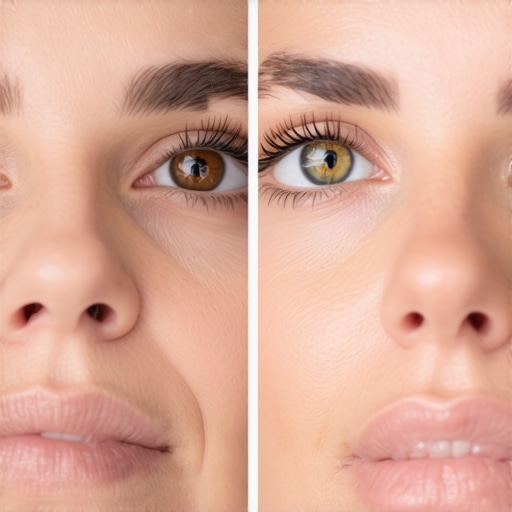
The structural blueprint of facial aging
I am sitting at my drafting table, the sharp scent of pencil lead and the static hum of a ticking watch filling the small office while I review the load-bearing failures of the human dermis. My career has been spent analyzing the structural integrity of skyscrapers, yet the biological architecture of the face presents a far more complex set of variables. This article provides information for educational purposes only and does not constitute medical advice, so you must consult with a qualified professional before undergoing any cosmetic procedure. To address the fundamental question of whether botulinum toxin or dermal fillers provide the better fix for deep wrinkles, we must first understand the foundation of the problem. If the wrinkle is a result of mechanical tension from muscle contraction, we address the motor. If the wrinkle is a structural collapse due to volume loss, we address the scaffold. Observations from the clinic show that dynamic lines require a temporary suspension of movement, whereas static folds demand a restoration of density. The answer depends on whether your facial ‘building’ is suffering from an overactive tenant or a decaying frame. For those seeking immediate clarity, Botox is the gold standard for dynamic lines like crow’s feet and frown lines, while dermal fillers are the superior choice for restoring lost volume in the cheeks and deep folds around the mouth. This distinction is the bedrock of modern aesthetics in 2026.
Clinical Reading List on Structural Restoration
- Comparing Botox and fillers for forehead restoration
- The science of cheek volume and lift
- Deep wrinkle fixes for the 2026 patient
Physiological zooming into the neuromuscular junction
To understand why Botox works, we must zoom past the skin surface and into the microscopic world of the neuromuscular junction. Imagine a cable connecting a power station to a heavy machine. In the body, the nerve is the cable, and the muscle is the machine. When the nerve wants the muscle to contract, it releases a chemical messenger called acetylcholine. This messenger is stored in tiny bubbles called vesicles. For these bubbles to pop and release their cargo, they must dock at the nerve’s edge using a specialized protein complex called SNAP-25. This is where the architecture of aging is modified at a molecular level. Botulinum toxin type A enters the nerve ending and specifically cleaves the SNAP-25 protein. Without this integral piece of the docking machinery, the vesicles cannot release acetylcholine. The muscle never receives the signal to fire. The tension is released. The skin sitting atop the muscle, once folded like a piece of paper being crumpled repeatedly, finally has the opportunity to smooth out. This is the mechanical reality of how botox for dynamic wrinkles functions. It is not about filling a hole, it is about stopping the force that created the crease in the first place.
The rheology of dermal fillers and the extracellular matrix
When we shift our focus to dermal fillers, we are no longer looking at muscle signals. We are looking at the extracellular matrix, which is the biological equivalent of the rebar and concrete within a floor slab. As we age, the production of hyaluronic acid and collagen slows down. The scaffolding begins to thin. This leads to a loss of structural support, causing the skin to sag and fold under the weight of gravity. Dermal fillers are composed of cross-linked hyaluronic acid, a sugar molecule that occurs naturally in your joints and skin. The magic lies in the cross-linking. In the lab, chemists use agents like BDDE to tie the hyaluronic acid chains together, creating a gel with specific rheological properties. We measure this through G-prime, or the storage modulus, which tells us how well the filler can resist deformation. A high G-prime filler acts like a sturdy joist, capable of lifting the cheekbones and defining the jawline. A low G-prime filler is more like a soft caulk, perfect for filling the fine lines around the lips without making them feel stiff. This is why a consultation for dermal fillers is so essential. The practitioner must select the right density for the specific structural deficit in your face.
Clinical Reading List on South Tampa Protocols
- Expert injectors in the South Tampa region
- Brotox and masculine facial architecture
- Avoiding the overfilled look in Florida
Regional environmental stressors in South Tampa
Living in South Tampa introduces specific environmental variables that affect the structural integrity of your skin. The intense Florida sun and high humidity act as constant erosive forces on the dermal foundation. Ultraviolet radiation is a primary driver of photo-aging, breaking down collagen fibers through a process called solar elastosis. This is not just about a tan. It is about the deep, microscopic degradation of the skin’s load-bearing proteins. When you walk down Bayshore Boulevard or spend an afternoon in Hyde Park, your skin is battling oxidative stress that accelerates the formation of static wrinkles. In this regional context, the decision between Botox and fillers often involves a hybrid approach. Botox might be used to prevent the deepening of frown lines caused by squinting in the bright Gulf light, while fillers are used to replace the volume lost to heat-induced dehydration and aging. Local experts understand that the high humidity can sometimes mask the appearance of fine lines, but the deep structural damage remains. This is why anti-aging results in Tampa require a protocol that accounts for the local climate.
The friction between industry hype and biological reality
The wellness industry often tries to sell a one-size-fits-all solution, but the biology of the face is non-linear and stubbornly individualistic. A common mistake is trying to ‘fill’ a line that is actually caused by an overactive muscle. If you inject filler into a deep frown line between the eyebrows without first addressing the underlying muscle tension with Botox, the filler will simply be displaced by the constant movement. It is like trying to patch a crack in a wall while the foundation is still shifting. Conversely, using too much Botox in an attempt to erase every single line can lead to a ‘frozen’ look that lacks the necessary emotional nuance of a human face. The 2026 standard emphasizes ‘micro-dosing’ and strategic placement. We are no longer looking for total immobilization. We are looking for structural harmony. Many patients come in asking how to look younger fast, but the real goal should be sustainable restoration. The friction arises when patients demand the look of a social media filter, ignoring the reality of their own bone structure and fat pad distribution.
Legacy methods versus 2026 bio-somatic protocols
In the past, the approach to facial aging was often reactive. People waited until the ‘building’ was falling down before seeking help. In 2026, the paradigm has shifted toward preventative maintenance. We now use biometric mapping to identify where structural failures are likely to occur before they become visible to the naked eye. This allows for ‘pre-juvenation’ where small amounts of botulinum toxin are used to retrain the muscles of the upper face. We also see a rise in the use of bio-stimulators, which are fillers that don’t just add volume but actually signal the body to produce its own collagen. This is the difference between adding a temporary support beam and actually reinforcing the wood. Whether you are looking at botox for aging skin or the latest dermal injectables, the goal is a result that looks like you, just better maintained. The modern patient values the subtle over the drastic, the precise over the generic.
Frequently Asked Structural Questions
Does Botox work for men? Yes, masculine facial architecture often requires higher doses due to greater muscle mass, but the goal is the same refreshed look. How long do dermal fillers last? Depending on the cross-linking and location, they can last anywhere from six months to two years. Can I get Botox and fillers in the same session? Absolutely, they often work in tandem to address different layers of the facial structure. Is the procedure painful? Most modern fillers contain lidocaine, and Botox needles are incredibly thin, making the discomfort minimal. What is the recovery time? Most patients return to their daily routine immediately, though minor bruising can occur. How do I choose between them? A professional assessment of whether your wrinkles are dynamic or static is the only way to decide correctly.
The final inspection of your aesthetic plan
As I roll up my blueprints and put away my pencils, the conclusion is clear. The human face is a dynamic structure that requires a nuanced maintenance plan. Botox and fillers are not competitors. They are different tools in the architect’s kit. One manages the forces of movement, while the other restores the integrity of the frame. Choosing the right one requires an eye for detail and a deep understanding of human physiology. If you are ready to address the structural integrity of your own face, the next step is a professional assessment. Do not settle for a quick fix that ignores the foundation. Seek out a clinic that treats your face with the same respect an architect treats a historic building. Your face is the only home you will ever live in. Make sure it is built to last.
This article really highlights how critical it is to understand the underlying causes of wrinkles before choosing treatments. I’ve seen friends who focused solely on fillers expecting immediate results, only to be frustrated when their lines returned once the effects wore off. It’s fascinating how Botox and fillers serve different but complementary roles—Botox relaxing overactive muscles and fillers restoring volumetric support. Personally, I’ve had good experiences with a combined approach, especially for deeper static lines and volume loss. It makes me wonder: how much does individual anatomy influence the decision between Botox and fillers? In my area, some clinics tend to push one over the other without a full structural assessment. Has anyone found that a tailored, comprehensive plan based on biometric mapping really improves long-term outcomes? Would love to hear others’ insights on optimizing treatment strategies for personalized facial aging protocols.