Medical Disclaimer: The following analysis is for informational and educational purposes only and does not constitute formal medical advice, diagnosis, or treatment. Rejuvenation therapies, including neurotoxin injections and dermal fillers, carry inherent risks such as localized bruising, asymmetry, vascular occlusion, or temporary muscle weakness. Consult a licensed medical practitioner before undergoing any minimally invasive aesthetic procedures.
The Architecture of Expression and Structural Aging
The smell of warm pencil lead fills the office as tracing paper rattles under draft lamps. In structural design, when a load-bearing beam sags, you do not simply slap a fresh coat of paint over the drywall and call the building restored. You look at the foundation, the tension points, and the natural mechanics of the frame. Human facial anatomy follows identical engineering rules. Facial aging is not merely a superficial skin problem. It is a four-dimensional structural shift involving bone resorption, superficial and deep fat pad atrophy, and chronic hypertonicity in the muscles of facial expression. When people attempt to reverse time by altering their fundamental facial geometry, they create dissonance. True aesthetic restoration preserves the original blueprint while restoring lost tension and volume.
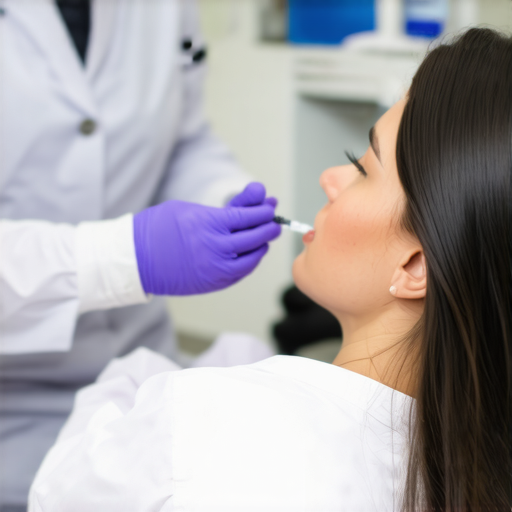
Biometric mapping reveals that non-surgical facial rejuvenation offers precise intervention points without the violent disruption of invasive surgery. By understanding how light reflects off anatomical contours, we can strategic restore youthfulness while maintaining total dynamic mobility. If you wish to understand how to reset your appearance without altering your identity, you must first evaluate the structural mechanics of soft tissue degradation. Many individuals seek solutions like why non-surgical facial rejuvenation is often smarter than a full facelift to maintain their distinct features while reversing atmospheric wear.
Metabolic Mechanics and the Biology of Dermal Degradation
At the microscopic scale, young skin relies on a dense, highly organized extracellular matrix governed by Type I and Type III collagen, elastin fibers, and glycosaminoglycans such as hyaluronic acid. Collagen fibers are synthesized by fibroblasts through a complex pathway requiring the hydroxylation of proline and lysine residues, a process dependent on enzymatic cofactors. As ultraviolet radiation penetrates the epidermis, reactive oxygen species activate matrix metalloproteinases. These enzymes break down collagen triple helices, causing the structural lattice to collapse under the weight of gravity and repetitive muscular contraction.
Simultaneously, repetitive facial movement causes dynamic wrinkles to convert into static crevices. When the frontalis, corrugator supercilii, or orbicularis oculi muscles contract, they pull the overlying skin into tension folds. Over decades, this mechanical shear stress breaks down the basal membrane. Botulinum toxin type A acts specifically at the neuromuscular junction by cleaving the SNAP-25 protein. This prevents the presynaptic release of acetylcholine, temporarily relaxing the hyperactive muscle and allowing the overlying dermis to heal its structural matrix. For those seeking targeted interventions, exploring preventative botox for women over 30 how to target fine lines before they set in demonstrates how early biological intervention stops permanent dermal scarring.
Clinical Reading List
For deeper clinical insights into non-surgical facial protocols, review these specialized analyses:
- Why Botox for Smile Lines Only Works for Certain Patients
- Why Chronic Migraine Patients Are Swapping Pills for Precise Injections
- Why Local Professionals Travel to South Tampa for Their Maintenance Injections
- Why Dr. Anne Hermann Prioritizes Natural Expression in South Tampa
- Why More Men Are Choosing Discreet Botox to Refresh Their Appearance
Regional Climate Impacts on Dermal Longevity in South Tampa
Observations from the clinic show that environmental stress severely accelerates structural degradation. Living in coastal environments like South Tampa exposes the skin to high humidity coupled with intense solar radiation. The heat near Bayshore Boulevard triggers chronic sub-clinical inflammation, often referred to as photoaging. Sunlight degrades the native hyaluronic acid within the papillary dermis at double the standard baseline rate. Residents walking near Ballast Point Park face compounding UV exposure that destabilizes lipid membranes.
This environmental reality makes localized care essential. Practitioners in humid climates must calibrate their approach, combining skin barrier repair with micro-targeted neurotoxin micro-dosing. Men in the area facing high-stress executive roles often notice accelerated brow furrowing. Exploring options for botox for guys tampa highlights how precise, masculine-focused treatments preserve rugged features while eliminating the appearance of chronic exhaustion.
Seven Non-Surgical Pillars for Natural Rejuvenation
1. Targeted Upper Face Neuromodulation
Static furrows across the forehead give the illusion of perpetual stress or fatigue. Applying precise doses of neurotoxin to the frontalis muscle reduces deep lines without freezing brow mobility. Treating botox for forehead lines allows the upper third of the face to rest, smoothing the surface so ambient light reflects evenly across the forehead plane.
2. Glabella and Periorbital Softening
Frown lines between the brows, often called the eleven lines, pull the face inward and downward, projecting unwanted sternness. Modulating the corrugator and procerus muscles opens the eye area dramatically. For a gentle refresh around the delicate orbital rim, reviewing how to soften crows feet while keeping your natural smile ensures that expressive movement remains intact when you laugh.
3. Mid-Face Hyaluronic Acid Volumization
As deep malar fat pads descend, the lower face loses its structural scaffold. Instead of chasing folds directly, placing cohesive hyaluronic acid gels onto the sub-orbicularis oculi fat restores the natural cheek apex. For residents seeking localized expertise, discovering dermal fillers carrollwood tampa demonstrates how mid-face lifting restores youthful proportions without altering jawline identity.
4. Subtle Perioral and Lip Architecture
Dynamic movement around the mouth leads to thinning lips and vertical radial lines. Over-filling this zone leads to unnatural projection. Using a neurotoxin to relax the orbicularis oris muscle creates a subtle roll of the lip border. Those interested in this light touch can read about the mechanics of a botox for lip flip to enhance the vermilion border without adding synthetic mass.
5. Lower Face Mobility and Nasolabial Balance
Deep folds running from the nose to the corners of the mouth are often treated incorrectly with direct filler injection, causing an overly heavy lower face. True correction requires analyzing smile mechanics. Understanding botox for smile lines clarifies when muscle modulation is appropriate and when structural mid-face support is required.
6. Specialized Neuromodulation for Menopause and Maturation
Feminine facial architecture undergoes sharp changes during hormonal shifts. Collagen density drops significantly following menopause, making skin more susceptible to creasing. Tailoring injection protocols for mature skin is critical. Reviewing strategies behind botox for women over 50 provides insight into using lower doses and broader diffusion patterns to respect delicate tissue structures.
7. Micro-Dosing for Hyperhidrosis and Texture Refinement
Facial sweating and enlarged pores disrupt skin texture, making the complexion appear rough and weathered. Injecting intradermal micro-quantities of neurotoxin paralyzes sweat glands and constricts micro-vessels. Learning how botox for sweating works at the epidermal layer demonstrates its double utility for controlling hyperhidrosis while refining dermal texture.
The Diagnostic Friction: Common Rejuvenation Failures
The standard consumer approach to anti-aging is fundamentally flawed. Most individuals look in the mirror, pinch a single wrinkle, and demand that specific fold be filled. This is the equivalent of trying to repair a sagging roof truss by pushing up on a single ceiling panel. Filling a static crease directly without addressing surrounding vector forces creates distorted, unnatural shapes.
Another common mistake is ignoring systemic safety protocols and practitioner qualifications. Patients frequently ask is botox safe south tampa when evaluating local clinics. Safety relies entirely on anatomical competence. Injecting product into wrong tissue planes can compromise vascular networks or cause unexpected muscle ptosis. True aesthetic competence requires respecting muscular depth, bone contours, and soft tissue boundaries.
Old-School Surgical Methods vs 2026 Micro-Targeting
Two decades ago, anti-aging meant aggressive surgical intervention. Doctors pulled skin tight across the bone, flattening natural curves and altering earlobe placement. The results were often stark, rigid, and instantly recognizable. Today, the philosophy has shifted completely toward non-surgical preservation.
| Feature | Traditional Surgical Facelift | 2026 Micro-Targeting Protocol |
|---|---|---|
| Primary Focus | Excising excess skin and pulling tissue tight | Restoring lost volume and relaxing hypertonic muscle |
| Anatomy Alteration | High risk of changing native feature shapes | Zero alteration to baseline structural identity |
| Recovery Window | 3 to 6 weeks of significant downtime | Immediate return to daily activities |
| Anatomical Precision | Macro-level structural traction | Microscopic cellular and muscular positioning |
Frequently Asked Questions
Will non-surgical treatments make my face look artificial or frozen?
Artificial outcomes occur when injectors over-dose muscle groups or place excessive volumes of dermal filler. When neurotoxins are administered precisely to reduce hypertonicity while maintaining basal tone, full emotional expression is preserved.
How do I know if I need neurotoxins or dermal fillers?
Neurotoxins treat dynamic wrinkles caused by muscle contraction, such as frown lines and crow’s feet. Dermal fillers address static volume loss caused by fat pad atrophy and bone resorption, restoring structural contours.
How long do non-surgical facial rejuvenation results typically last?
Neuromodulators like Botox generally maintain efficacy for three to four months. Hyaluronic acid dermal fillers last anywhere from nine to twenty-four months depending on the density of the product and the vascularity of the treatment site.
At what age should someone begin preventative non-surgical treatments?
Preventative care begins when dynamic lines start leaving faint static impressions on the skin at rest, typically in the late twenties to early thirties. Intervening at this stage prevents deep structural creasing in the dermis.
Are non-surgical procedures painful?
Discomfort is minimal. Injectors utilize ultra-fine micro-needles, topical numbing creams, and vibration distraction tools to ensure patient comfort throughout the procedure.
Preserving Your Structural Identity
Facial rejuvenation should never feel like an attempt to wear someone else’s face. The goal of modern non-surgical aesthetics is structural restoration, keeping the foundation solid while softening the marks left by atmospheric stress. By balancing precise neurotoxin micro-dosing with subtle volumization, you maintain your unique character while projecting a rested, energetic baseline. Take control of your aesthetic maintenance by consulting with a verified anatomical expert who prioritizes structural integrity over temporary trends.