
Medical Risk Management Disclaimer. This article is for informational purposes only and does not constitute medical advice. Consult with a board-certified professional in South Tampa before beginning any aesthetic treatment. All procedures involve risks including bruising, swelling, or vascular compromise.
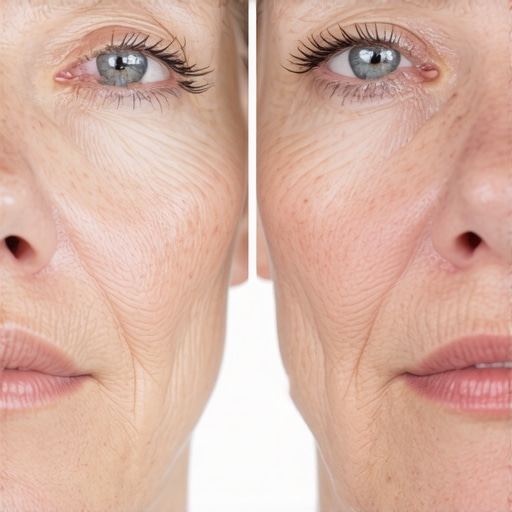
The blueprint of a face reveals more than just age, it shows the load-bearing stress of every expression and every sleepless night in the office. I sit here with the smell of pencil lead on my fingers, looking at the structural failure of the forehead as if it were a sagging roofline. The fundamental question for anyone looking to repair these biological cracks is whether the issue lies in the motor or the material. Botox and fillers are not interchangeable tools, one stops the vibration that causes the wear, while the other reinforces the joists that have already snapped. Editor Take. Botox is the gold standard for dynamic lines caused by muscle motion, while fillers are the structural necessity for static folds and volume loss. For residents near Hyde Park or Westchase, the choice depends on whether the wrinkle disappears when your face is at rest.
The biological blueprint of muscle inhibition
To understand why botox vs fillers remains the central debate in aesthetics, we must zoom into the synaptic cleft. The human face is a complex network of over forty muscles, each governed by the release of a neurotransmitter called acetylcholine. When the brain sends a signal to frown, small vesicles filled with this chemical move toward the edge of the nerve ending. This is where the engineering of Botox becomes fascinating. The botulinum toxin molecule consists of a heavy chain and a light chain. Once injected, the heavy chain binds to the nerve terminal, allowing the light chain to enter the cytosol. Inside the cell, the light chain acts like a pair of microscopic scissors, cleaving a protein called SNAP-25. This protein is part of the SNARE complex, which is the mechanical winch required to release acetylcholine. Without SNAP-25, the vesicles cannot fuse with the membrane. The signal is lost. The muscle remains in a state of flaccid paralysis, and the skin above it can finally rest, allowing the deep grooves to smooth out over time. This is not just a cosmetic change, it is a metabolic pause in the wear-and-tear cycle of the dermis. Many patients seeking botox for masseter muscle issues understand this well, as they are essentially treating a structural overload of the jaw joints.
The rheology of dermal reinforcement
Fillers operate on a different set of physics. If Botox is the stop-work order for the muscles, fillers are the new concrete poured into the foundation. Modern fillers are primarily composed of cross-linked hyaluronic acid. This is a sugar molecule that occurs naturally in our joints and skin, capable of holding one thousand times its weight in water. However, raw hyaluronic acid would be metabolized by the body in hours. To prevent this, scientists use a cross-linking agent like BDDE to create a stable, three-dimensional matrix. This matrix acts as a scaffold. When injected into the cheeks or the nasolabial folds, it provides immediate lift by displacing the overlying skin. It is a game of volume and pressure. The viscosity of the filler determines its G-prime, or its ability to resist deformation. High G-prime fillers are used for the chin and jawline, where they must mimic the hardness of bone. Low G-prime fillers are softer, used for botox for lip flip procedures or subtle lip enhancements where the tissue must remain mobile and natural to the touch. In the clinic, we see that the most effective best treatments to look younger often involve a combination of both philosophies.
Clinical Reading List
- Identifying high authority injectors in South Tampa
- New 2026 protocols for natural skin results
- Why Brotox is the new standard for men in Tampa
- The evolution of natural lip fillers in Hyde Park
Hydration logistics in the Florida heat
Living in Tampa introduces a specific set of environmental variables that an architect must account for. The humidity of the Gulf Coast actually aids in the recovery of the skin surface, but the intense UV radiation accelerates the breakdown of collagen and elastin fibers. This is the structural rot of the face. For someone frequenting a med spa south tampa residents trust, the strategy often revolves around damage control. UV rays generate reactive oxygen species that activate matrix metalloproteinases, enzymes that literally eat your skin’s internal support. When we use botox results for aging skin, we are trying to stop the mechanical creasing that makes these UV-damaged areas even more susceptible to permanent scarring. I have observed that patients who maintain a strict antioxidant protocol alongside their injections see a significantly higher return on their aesthetic investment. It is about maintaining the integrity of the materials. If you are getting lip fillers hyde park tampa, you have to consider how the systemic inflammation from sun exposure might affect the longevity of the product. The body is a closed system, and a breach in one area affects the whole site.
The friction of generic aesthetic advice
The standard industry narrative suggests that everyone should start treatments the moment they see a line. I disagree. As someone who treats the body like a complex structure, I know that over-reinforcing a wall that doesn’t need it leads to unnatural movement. This is why the overfilled look is so prevalent. People are using fillers to solve problems that are actually caused by gravity and bone resorption, not just skin laxity. For example, the hollows under the eyes often require a deep structural lift of the cheek, not just a surface-level patch. If you inject a soft filler into a high-tension area, it will migrate. It is like using wood glue to fix a steel beam. This is also true for brotox tampa. Men have different muscle mass and skin thickness. If you apply the same injection pattern to a man that you do to a woman, you will drop the brow and ruin the structural balance of the face. You have to respect the original blueprints. Many clinics in botox westchase tampa are now pivoting toward this bespoke, anatomical approach.
Legacy training vs 2026 biohacking reality
In the old days, we just filled the lines. In 2026, we are looking at the face through the lens of regenerative medicine and bio-individual logistics. We aren’t just erasing wrinkles, we are optimizing the metabolic environment of the skin. This includes looking at things like the gut-skin axis and how cortisol from a high-stress Tampa career might be thinning the dermis. Question. Is there an age that is too early to start? Answer. If you can see the line when your face is at rest, the structural damage has begun. This usually happens in the late twenties or early thirties for most people in the sun-belt. Question. How long does the repair last? Answer. Botox typically lasts three to four months, as the nerve endings eventually grow new receptors. Fillers can last six to eighteen months depending on the density of the cross-linking and the metabolic rate of the patient. Question. Does it hurt? Answer. We use specialized cannulas and cooling systems to ensure the experience is as seamless as a routine inspection. Question. Can I exercise after? Answer. You must wait twenty-four hours to ensure the material stays in the designated zone. Question. Will I look frozen? Answer. Only if the injector ignores the math of the muscle. Question. What about the jawline? Answer. Using botox for jaw slimming is a perfect example of modern structural refinement.
Final structural assessment
The face is not a static image, it is a living, breathing architecture that must withstand the pressures of time and environment. Choosing between Botox and fillers is not a matter of preference but a matter of forensic analysis. You have to identify where the failure is occurring. Is it the muscle movement or the loss of volume? By using the right tool for the specific structural need, we can maintain a look that is both youthful and functionally sound. My job is to ensure that the restoration doesn’t look like a renovation. It should look like the building was simply well-maintained over the decades. Whether you are walking through the parks of South Tampa or heading into a high-stakes meeting, your face should reflect your strength, not your stress. Look for the experts who understand the math behind the beauty. The integrity of the structure depends on it.{“@context”:”https://schema.org”,”@type”:”FAQPage”,”mainEntity”:[{“@type”:”Question”,”name”:”Is there an age that is too early to start botox?”,”acceptedAnswer”:{“@type”:”Answer”,”text”:”If you can see the line when your face is at rest, the structural damage has begun. This usually happens in the late twenties or early thirties.”}},{“@type”:”Question”,”name”:”How long does the repair last?”,”acceptedAnswer”:{“@type”:”Answer”,”text”:”Botox typically lasts three to four months, while fillers can last six to eighteen months depending on the density and patient metabolism.”}},{“@type”:”Question”,”name”:”Can I exercise after botox or fillers?”,”acceptedAnswer”:{“@type”:”Answer”,”text”:”You must wait twenty-four hours to ensure the material stays in the designated zone and avoids migration.”}}]}
I find the distinction between Botox as a muscle relaxant and fillers as structural support a crucial point often overlooked in quick consultations. From my personal experience in Tampa, I noticed that addressing static volume loss with fillers while using Botox to soften dynamic lines provides a more harmonious and natural result. It’s fascinating how understanding the underlying architecture of the face can prevent over-treatment and maintain expressions that still look authentic. I’m curious, has anyone experimented with combining these treatments early on to slow down the aging process rather than waiting for noticeable wrinkles? It seems like proactive maintenance might be the key to preserving facial structure over time, especially considering the environmental factors like sun and humidity we face here. What are your thoughts on timing and combining approaches for optimal results? This nuanced approach really highlights the importance of customized treatment plans.