
Disclaimer: This analysis represents clinical observations regarding facial neuromuscular mechanics and aesthetic interventions. It is intended strictly for educational and risk-management purposes. Individual anatomical variances require direct evaluation by a qualified medical provider before undertaking any treatment protocol.
The hum of the HVAC unit overhead clicks off, leaving only the quiet ticking of a desk clock and the sharp smell of cold coffee and leather shoes. Across the mahogany table, executives, founders, and legal partners in Hyde Park Tampa face an insidious form of biological fatigue. It shows up not in blood markers or executive performance decks, but in the structural drift of the face. Heavy glare lines cut across the brow during high-stakes negotiations, while persistent tension in the masseter muscle builds during long drives along Bayshore Boulevard. Men do not seek dramatic transformations. They look for structural corrections that preserve natural movement without signaling that work was done.
The Cellular Math of Male Facial Stress
Male facial architecture relies on distinct anatomical parameters. Men possess thicker dermis layers, higher collagen density, and significantly greater muscle mass in the frontalis, corrugator supercilii, and procerus muscles compared to women. When a male executive contracts these facial muscles under chronic stress, the mechanical force generated per unit area is substantially higher. This force drives hyper-functional dynamic lines into deep static furrows through constant dermal creasing.
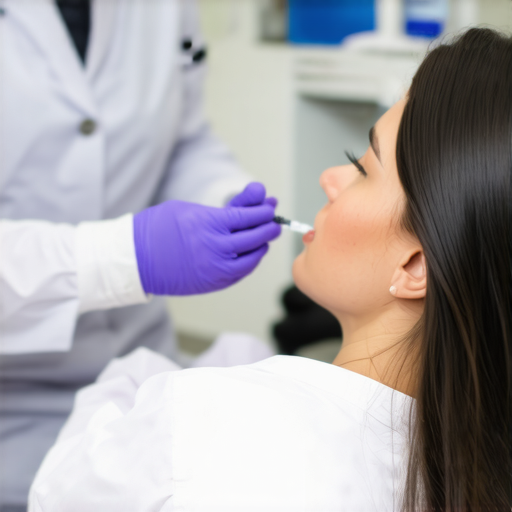
At the microscopic level, acetylcholine release at the neuromuscular junction triggers muscle contractions by binding to nicotinic acetylcholine receptors on the motor endplate. Botulinum toxin type A interrupts this process by cleaving SNAP-25, a protein essential for the docking and fusion of synaptic vesicles carrying acetylcholine. Without synaptic vesicle release, muscle activity decreases, allowing the overlying dermis to recover. Because male muscle fibers are larger and require higher firing thresholds, precision dosing is required. Under-dosing leads to premature wash-out within six weeks, while aggressive over-dosing produces a flat, immovable brow that destroys competitive presence in boardroom settings. Understanding how masculine anatomy changes the strategy remains essential when designing a precision neuromodulator plan.
Neuromuscular Mapping of the Male Brow and Orbital Ring
Observations from the clinic show that targeting male facial creases requires strict adherence to natural brow positioning. The male brow rests natively on the supraorbital rim in a flat, horizontal plane. Inadvertently weakening the lateral fibers of the frontalis muscle can cause severe brow ptosis, making the upper eyelids feel heavy and tired. Precision placement requires targeting the medial frontalis while preserving lateral support, softening deep forehead lines without dropping the brow overhang.
Around the eyes, hyperdynamic contraction of the orbicularis oculi creates lateral orbital rhytids, commonly called crow’s feet. For male patients, complete erasure of these lines looks unnatural. The goal is softening muscular pull to open the eyes while maintaining natural expression. When evaluating options, understanding the exact way to treat men’s crow’s feet without losing your natural expression allows men to look refreshed rather than altered.
South Tampa Environmental Demands and Structural Resistance
Living and working in South Tampa introduces specific environmental factors that accelerate structural skin aging. Year-round exposure to intense ultraviolet radiation breaks down cross-linked collagen fibers within the extracellular matrix through the activation of matrix metalloproteinases. This process, combined with constant squinting against the harsh light near Davis Islands and the Tampa waterfront, deepens periorbital lines at twice the rate of indoor environments.
Biometric mapping reveals that men who commute across the Howard Frankland or spend weekends on the water experience asymmetrical photo-aging and heightened muscular tension. The combination of UV damage, heat-induced inflammation, and physical squinting creates a complex problem: broken collagen combined with hyperactive underlying muscle. To manage this double threat, men across the area increasingly use subtle injections to stay competitive and maintain an alert, energized presence in demanding professional settings.
Masseter Hypertrophy and TMJ Stress in High-Pressure Roles
Stress among executives rarely stays confined to mental processing. It manifests physically as nighttime bruxism and diurnal jaw clenching. The masseter muscle, one of the strongest in the human body by force generation, hypertrophies under this constant isometric load. Over time, this leads to structural jaw widening, persistent tension headaches, and temporomandibular joint pain.
By placing precise units of botulinum toxin directly into the deep belly of the masseter, injectors interrupt hyperactive motor unit firing without compromising chewing functionality. Over three to four weeks, the muscle relaxes, relieving strain on the jaw joint and slimming a boxy, stress-built lower face back to its natural baseline. Many professionals seeking relief choose targeting TMJ pain and jaw clenching with precise masseter injections to eliminate discomfort and prevent further dental wear.

[elementor-template id=”3617″]
The Friction of Standard Aesthetic Protocols
Conventional cosmetic approaches often fail male patients because standard protocols were built around female aesthetic ideals. Standard med-spa templates focus on arched brows, fully smooth foreheads, and volume addition, which can distort male features. When applied to men, these techniques create a soft, rounded appearance that compromises natural jaw lines and brow structures.
Male facial architecture requires a balanced approach focused on muscle moderation rather than total paralysis. For example, treating the glabella (the angry 11s between the eyebrows) requires high precision to relax the corrugator supercilii without altering the flat alignment of the male brow. Ignoring these structural differences is why many men hesitate to seek treatment. Choosing an injector who understands the male facial structure ensures that treatments respect natural anatomy while effectively reducing deep creases.
Distinguishing Dynamic Lines from Volume Loss
A common mistake in non-surgical rejuvenation is treating dynamic wrinkles with dermal fillers or using neuromodulators for static structural hollows. Neuromodulators target active muscle movement, making them ideal for dynamic creases like forehead furrows and brow lines. In contrast, deep structural folds caused by bone resorption and fat pad loss require targeted volume restoration.
For instance, deep nasolabial folds or sunken midfaces stem from loss of structural support rather than muscle overuse. Attempting to freeze the area with neuromodulators leads to unnatural expressions. Understanding how to decide between botox or fillers helps patients choose the correct intervention for their specific clinical pattern.
Evolving Treatment Frameworks: 2020 versus 2026
In recent years, the philosophy behind male aesthetic interventions has shifted dramatically. High-dose, full-paralysis protocols have given way to subtle, low-dose micro-treatments designed to preserve full expression while preventing deep line formation.
| Parameters | 2020 Standard Approach | 2026 Precision Protocol |
|---|---|---|
| Primary Goal | Complete smoothing of all dynamic lines | Modulation of excessive force with preserved mobility |
| Dosing Strategy | High-unit bolus injections across broad zones | Micro-targeted, muscle-density-mapped unit delivery |
| Male Brow Alignment | Often lifted laterally, creating an unwanted arch | Maintained flat along the supraorbital rim |
| Masseter Approach | Focus purely on dramatic lower-face slimming | Focus on functional TMJ relief and balanced proportions |
| Treatment Interval | Rigid 90-day re-injection cycles | Customized schedule based on individual metabolic clearance |
Frequently Asked Questions
Will subtle injections make my face look frozen or unnatural?
No. When dosing is adjusted for male muscle mass and precisely placed, treatment relaxes hyperactive muscle fibers while maintaining natural mobility and expressiveness.
How long do results typically last in men?
Because men have higher muscle mass and metabolic rates, results generally last between three and four months. Regular maintenance appointments prevent deep dynamic lines from setting back into the dermal layer.
Is there any downtime following a masseter or forehead treatment?
Downtime is minimal. Patients can return to desk work immediately. However, strenuous workouts, sauna sessions, and direct facial pressure should be avoided for 24 hours to prevent product migration.
How does Dysport differ from Botox for male treatments?
Dysport has a slightly broader diffusion field, making it very effective for covering larger areas like a broad male forehead. Botox offers tighter localized control, ideal for precise adjustments around the brow or eyes. A detailed comparison of choosing between botox and dysport can help determine the best match for your anatomical goals.
Can injections relieve tension headaches caused by jaw clenching?
Yes. Injecting neuromodulators into hyperactive masseter and temporalis muscles reduces the force of involuntary jaw grinding, significantly easing associated tension headaches.
Maintaining Structural Authority
Maintaining a refreshed, competitive appearance does not require drastic surgical changes or obvious aesthetic modifications. For professionals across South Tampa, subtle neuromodulation offers a discrete, high-return strategy to manage facial stress, protect skin integrity, and eliminate severe frown lines without interrupting daily schedules. To explore how custom anatomical mapping can refresh your facial structure while preserving your natural expression, schedule a private consultation with our clinical team today.