
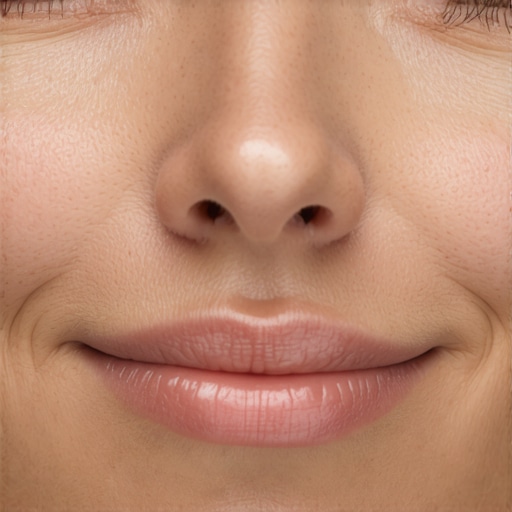
The structural failure of the midface chassis
I spend my mornings with grease under my fingernails and the smell of motor oil in my lungs. When I look at a face, I do not see a canvas for a painter. I see a complex piece of machinery with gears, pulleys, and structural joists that have been running for forty years without a proper overhaul. You cannot just slap some paint on a rusted fender and call it a restoration. This article provides general information regarding aesthetic procedures and does not constitute medical advice. Always consult with a licensed professional like those practicing at Dr. Hermann’s clinic before making health decisions. The blunt truth is that those lines around your mouth are not just skin deep. They are the result of a suspension system that has lost its tension and a biological engine that is running too hot. If you want to fix the nasolabial fold, you have to look at the torque of the zygomatic muscles and the depletion of the deep fat pads that act as the shock absorbers of the human face.
The bluf summary for high performance maintenance
Fixing smile lines requires a dual-phase approach. First, you must address the muscle hyper-activity that creates the crease. Second, you must restore the volume loss in the cheeks that allows the skin to drape and fold. A single-point injection is a temporary patch that ignores the underlying mechanical failure. Proper aesthetics in South Tampa focus on long-term structural integrity over short-term camouflage.
The microscopic math of the biological gasket
Let us talk about the molecular reality of your skin. Underneath the surface, there is a grid of collagen and elastin fibers that look remarkably like the cross-weave in a high-pressure hydraulic hose. Over time, UV radiation from the Tampa sun acts like a corrosive solvent, breaking down the cross-links that keep the skin taut. This is not some vague process. It is a specific chemical degradation where the fibroblasts, the tiny workers in your dermal layer, stop producing the necessary raw materials. When the production of type I and type III collagen drops, the skin loses its tensile strength. It starts to sag under the weight of gravity, exactly like a belt drive that has been stretched beyond its limit. When you smile, the muscles pull on this weakened material, creating a permanent crease. This is why choosing between botox for motion and filler for deep creases is the first step in a real repair job. You are dealing with a material science problem, not just a cosmetic one.
The metabolic cost of facial expression is governed by the release of acetylcholine at the neuromuscular junction. Think of this as the electrical spark that tells the piston to move. When you use Botox, you are essentially installing a governor on that engine. It limits the maximum RPM of the muscle so it does not slam into the skin with enough force to cause a crack. But if the line is already etched into the surface, you need more than a governor. You need a structural sealant. Hyaluronic acid fillers act as a biological grease, pulling water into the extracellular matrix to push the crease back out from the inside. Without this internal pressure, the skin will keep buckling in the same spot, no matter how much you relax the muscle. It is about balancing the fluid pressure with the mechanical tension.
Clinical Reading List for Structural Maintenance
- The Hyde Park secret to lip fillers that dont look like fillers
- Deciding between botox and fillers for your specific goal
- Why your choice between botox and dysport depends on your muscle movement
South Tampa heat and the degradation of cellular sealant
Living near Hyde Park Village or walking the concrete path of Bayshore Boulevard adds a specific environmental load to your biological machinery. The humidity in Florida keeps the skin from drying out, but the intense heat speeds up the metabolic degradation of any injectable material. A mechanic knows that a car in the desert needs a different coolant than one in the mountains. Your face is the same. In South Tampa, the high metabolic rate of active professionals means that fillers and neurotoxins might break down faster than the manufacturer says on the box. This is why we see patients coming in for a refresh of vertical lip lines more frequently during the summer months. The body is constantly trying to flush out foreign substances, and the heat just helps it do the job. If you are training at a high-intensity gym in South Tampa, your body is a furnace. That furnace burns through everything, including the aesthetic work you just paid for.
We also have to account for the unique facial expressions of the local culture. The social demands of high-stakes business in the city lead to a lot of squinting and jaw clenching. This creates a secondary tension in the lower face. When the masseter muscle is constantly engaged, it pulls down on the cheek structure, making those smile lines look even deeper. It is a chain reaction. You can fix the line, but if the jaw is pulling the whole assembly down, the repair will fail prematurely. Understanding the full map of facial movement is what separates a parts-swapper from a master mechanic.
Why the standard influencer advice fails the stress test
Most people get their advice from someone holding a smartphone and a ring light. They think a few units of botox for crow’s feet will magically fix a face that has been neglected for twenty years. That is like putting high-octane fuel in a car with a blown head gasket. It might run better for a mile, but the engine is still dying. The standard advice fails because it ignores the depth of the fat pads. As we age, the malar fat pad in the cheek slides down and forward. This shift is what creates the heavy fold at the smile line. If you just fill the line, you are adding weight to an already sagging structure. You are making the problem worse by increasing the load on the suspension.
The contrarian view is that you should almost never fill the smile line directly as a first step. Instead, you should reinforce the cheekbone area to lift the entire chassis. By adding volume to the lateral face, you pull the skin back and up, which naturally smooths out the folds without making the face look heavy or puffy. This is the difference between a botch job and a precision alignment. If your injector just follows the line like a toddler with a crayon, find a new shop. You want someone who understands the leverage and the load-bearing limits of the human skin. A skilled hand knows that erasing smokers lines is about the balance of the whole mouth, not just one wrinkle.
Legacy training vs the 2026 biohacking reality
In the old days, you waited until your face was falling off and then you went under the knife for a full reconstruction. That is 1950s technology. In 2026, we use preventative maintenance. We treat the skin like a classic car that never leaves the garage without a full inspection. We are looking at bio-stimulators that force the body to grow its own repair tissue. We are using neurotoxins to train the muscles to stay relaxed even when the injector is not around. This is stat-maxing for the human biological profile. It is about keeping the engine running clean so you never have to do a full engine swap.
Frequently asked questions from the shop floor
Does filling a line fix the muscle torque? No. Filling a line only addresses the surface gap. To fix the torque, you need a neurotoxin to reduce the pull of the muscle. Most successful repairs use both.
How long do these biological repairs last? It depends on your internal thermostat. High-performance athletes and people who spend a lot of time in the Florida heat will burn through material in three to four months. Others might get six.
What happens if the injector misses the mark? If the alignment is off, you get asymmetry. It is like a car that pulls to the left. Fortunately, most modern fillers can be dissolved if the repair job is sloppy.
Is there a limit to how much filler a face can hold? Yes. Every chassis has a maximum load capacity. If you exceed it, the skin will stretch and sag even more. Precision is better than volume.
Can I skip the injections and just use expensive creams? Creams are like a wax job. They make the surface shine, but they do nothing for the pistons or the frame. If the line is deep, you need a medical-grade fix.
The final inspection of the midface
Your face is the most expensive piece of equipment you will ever own. It does not make sense to treat it with cheap parts or unskilled labor. When you see those smile lines starting to etch into your skin, do not wait for the structural failure to become permanent. Look for a specialist who treats the anatomy with the respect it deserves. Whether it is smoothing a gummy smile or recalibrating your entire profile, the goal is a natural look that keeps the machinery running smooth for another decade. Put down the influencer filters and get under the hood with a professional. The road ahead is long, and you want your face to be able to handle the mileage without breaking down. If you are ready to fix the alignment, book a consultation and let us look at the blueprint of your skin together.
I really appreciate this mechanical perspective on facial anatomy. Treating the midface like a suspension system that needs proper tension rather than just slapping filler into a crease makes so much sense. I used to think a direct line injection was all it took, but after dealing with my own stubborn nasolabial folds and realizing how much my jaw clenching adds to the downward pull, I see why those quick fixes never lasted. Living down here in the Florida heat and hitting the gym hard definitely seems to accelerate how fast my body metabolizes everything too. For those of you who are active and notice your maintenance wears off faster, how do you usually adjust your schedule with your provider to keep the chassis properly aligned without overloading it?