
Disclaimer: This analysis represents clinical observations regarding physiological aging, neuromuscular modulation, and structural skin remodeling. It is intended strictly for educational and information purposes. Consult a licensed medical practitioner prior to initiating any clinical intervention or procedural strategy.
ACT I: The Structural Blueprint of Dermal Motion
The smell of graphite and cold tracing paper hangs heavy over the drafting table while an old brass pendulum clock ticks against the drywall. Human tissue obeys the rigid laws of structural engineering: continuous shear stress, cyclical tension, and mechanical fatigue. When observing dynamic rhytids, such as nasolabial folds or lateral cantal rhytids, one is not looking at a mere failure of hydration. One is watching a load-bearing column experience structural deformation. The extracellular matrix relies on an intact scaffolding of type I and type III collagen fibers, woven alongside elastin strands within a glycosaminoglycan ground substance. As intrinsic cellular senescence accelerates, driven by telomere attrition and mitochondrial reactive oxygen species, this matrix loses its tensile elasticity. When muscular contraction occurs, specifically from the levator labii superioris alaeque nasi or the zygomaticus major, the overlying skin no longer snaps back into place. Instead, it creases along defined stress points. Softening these dynamic lines requires a precise understanding of vectors, neuromuscular tone, and structural support rather than blanket volumetric filling.
ACT II: Cellular Mechanics and Acetylcholine Cleavage
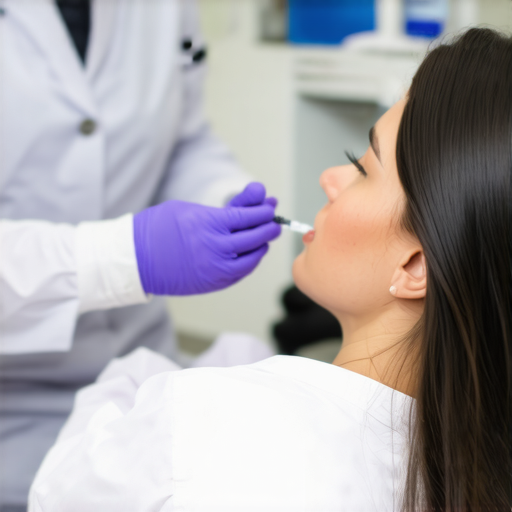
At the microscopic level, neuromuscular modulation relies on the precise inhibition of neurotransmitter release at the presynaptic terminal. When botulinum neurotoxin type A is introduced into target muscle groups, such as the nasalis or orbicularis oculi, the heavy chain of the protein binds selectively to SV2 receptors on the presynaptic neuronal membrane. Through receptor-mediated endocytosis, the light chain enters the cytosol. This zinc-dependent metalloprotease specifically cleaves the SNAP-25 protein, a mandatory component of the SNARE complex. Without a functional SNARE complex, synaptic vesicles containing acetylcholine cannot fuse with the presynaptic membrane. Motor endplate signaling drops, temporarily dampening local muscular contraction.
Biometric mapping reveals that dampening these micro-contractions reduces the constant shear force applied to the epidermal-dermal junction. When the muscular pull is modulated, fibroblasts within the papillary dermis gain a window of mechanical rest. This allows for localized extracellular matrix repair without continuous disruption. For deeply set creases where tissue loss has already occurred, relying entirely on neuromodulation fails. This is where cross-linked hyaluronic acid gels or biostimulatory agents act as structural sholes, re-establishing deep dermal support. Selecting the correct intervention depends on whether the aesthetic concern stems from muscular hyperactivity or structural volume loss, as explained in this guide on softening smile lines without a one-size-fits-all approach.
ACT III: Microclimates and Subtropical Environmental Stress
Environmental stress plays a massive role in skin integrity. In coastal Florida regions, intense UV irradiation induces high levels of matrix metalloproteinases (MMPs), specifically MMP-1, MMP-8, and MMP-9. These enzymes degrade native collagen types I and III at an accelerated rate. High humidity, constant UV exposure, and heat-induced oxidative stress accelerate dermal breakdown. Observations from the clinic show that individuals living in tropical microclimates often display dynamic fine lines that convert into static structural creases at an earlier chronological age.
Addressing these concerns requires local expertise that understands the interplay between intense sun exposure and structural skin health. Exploring non-surgical anti-aging methods helps individuals maintain structural integrity without undergoing invasive surgical procedures. Furthermore, targeting targeted areas like squint-induced lines around the lateral canthus requires specialized strategies. Understanding how to manage these nuances can be explored through specialized techniques for botox for crow’s feet, preserving natural expression while mitigating environmental damage.
Clinical Reading List
- Finding the Best South Tampa Botox Clinic Without Falling for Hype
- Preventative Botox for Women Over 30: How to Target Fine Lines Before They Set In
- Why Strategic Botox is the Most Effective Way to Look Younger Fast
- Softening Smile Lines: Why One Injection Technique Does Not Fit Every Face
- Those Tiny Nose Wrinkles: A Simple Fix for Botox Bunny Lines
ACT IV: The Myth of the Universal Injectable Solution
The mainstream aesthetic narrative pushes a dangerous oversimplification: treat every wrinkle with high-dose neuromodulators or blanket volumetric filler. This crude approach treats the human face like a flat drywall patch rather than an active, kinetic structure. Administering excessive neuromodulator units into lower facial muscles often causes asymmetry or functional impairment, paralyzing key smile elevators and creating an unnaturally frozen midface. Similarly, overloading dynamic creases with high-G-prime dermal fillers leads to filler migration, unnatural pillowing, and lymphatic obstruction.
Consider dynamic nasal rhytids caused by the active contraction of the nasalis muscle. Over-treating these lines without evaluating surrounding muscular vectors causes compensatory hyperkinesis of the levator labii superioris, yielding secondary dynamic wrinkles across the lower eyelid. Clinical precision requires adjusting dosage based on individual muscle mass, fiber orientation, and skin thickness. For hyperactive nasal muscles, specialized application protocols, such as those detailed in this clinical review on treating bunny lines with precise injections, prove that micro-dosing yields superior structural balance over heavy-handed paralysis.
ACT V: Legacy Restraint Meets 2026 Biostimulation
Traditional aesthetic interventions relied almost exclusively on high-volume tissue fill and total motor block. Modern 2026 protocol prioritizes regenerative structural signaling and targeted micro-dosing. The goal is no longer absolute immobility; it is the retention of natural kinetic expression combined with dermal reinforcement. By combining low-dose neuromodulators with polynucleotides, biostimulatory poly-L-lactic acid (PLLA), or targeted calcium hydroxylapatite (CaHA) micro-spheres, clinicians stimulate endogenous fibroblast activity without distorting underlying muscular dynamics.
Is neuromodulation safe for thin skin around the eyes?
Yes, when administered at precise superficial depths into the orbicularis oculi muscle. Because periocular skin lacks thick subcutaneous fat, accurate micro-dosing prevents deep diffusion toward the extraocular muscles while dampening fine creases. For tailored strategies around fragile eyelid skin, review the methodology for treating wrinkles under eyes.
How do male muscle fibers differ during aesthetic treatments?
Male facial anatomy typically features greater muscle mass, higher density of motor endplates, and thicker dermis. Consequently, men generally require higher unit dosages and specific injection vector adjustments to avoid lowering the brow position or blunting strong jawline contours. Male patients seeking subtle, masculine refinements often utilize targeted protocols such as mens botox solutions.
What is the difference between dynamic lines and static creases?
Dynamic lines appear only during active muscular contraction, driven by acetylcholine release across motor endplates. Static creases are present even when the face is completely at rest, signaling collagen depletion and permanent mechanical fracturing of the dermal matrix.
Why does over-filling smile lines often make them look worse?
Placing dense filler directly into dynamic motion zones creates unnatural stiffness during smiling and disrupts normal facial lymph drainage. Restoring volume strategically in the deep midface structures or using soft, micro-droplet technique yields far superior mechanical outcomes.
ACT VI: Structural Integrity and Kinetic Balance
Maintaining facial youthfulness is an exercise in structural physics and kinetic harmony. Rather than attempting to freeze tissue or obscure natural motion under heavy layers of synthetic volume, long-term success relies on respecting natural anatomy. By combining light, vector-specific neuromuscular modulation with targeted collagen stimulation, the integrity of the dermal matrix remains intact for decades. Request a personalized anatomical assessment with a qualified clinical specialist to map out your long-term structural restoration strategy.