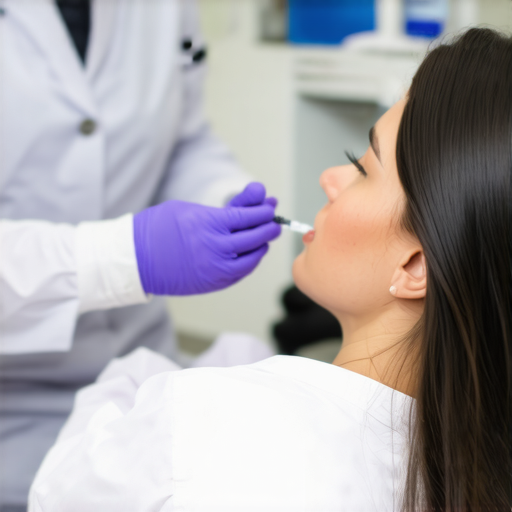

Disclaimer: The information provided herein is for educational and performance-optimization analysis only and does not constitute formal medical diagnosis or treatment. Consult a licensed healthcare provider before undertaking neuromuscular treatments or metabolic interventions. Smells like pencil lead and drying wet concrete around the clinic bay today. The quiet hum of an air handler ticks away in the background. If you are past forty and wondering how neuromuscular modulators alter facial mechanical stresses, the short answer is simple. Botulinum toxin type A temporarily inhibits acetylcholine release at the neuromuscular junction, preventing focal muscular contraction, relaxing dynamic skin folding, and allowing the overlying dermis to remodel over three to four months. The result is a structural load shift that smooths hyperfunctional lines while preserving fundamental facial mechanics when administered with architectural precision.
The Microscopic Reality of Neuromuscular Blockade After Forty
To understand what happens when a targeted dose of botulinum toxin enters human tissue, we must look at the presynaptic terminal of the motor endplate. The human face after four decades of exposure to ultraviolet radiation and reactive oxygen species undergoes structural degeneration. Collagen density drops, elastin fibers fragment, and the dermal-epidermal junction flattens. When you smile, squint, or frown, the underlying facial muscles of expression insert directly into the dermis. Unlike skeletal muscle in the arms or legs, which attaches bone to bone, facial muscles pull directly on the skin canvas. Every rep of expression creates a mechanical shear stress along defined tension lines.
At the cellular level, synaptic vesicles filled with acetylcholine depend on a specialized group of proteins called the SNARE complex to fuse with the presynaptic membrane. Botulinum toxin cleaves specific proteins within this SNARE protein network. Without functional SNARE proteins, acetylcholine cannot discharge into the synaptic cleft. The muscle fiber remains in a state of muscular flaccidity. It cannot contract. When muscle contraction stops, the repetitive mechanical creasing of the skin ceases instantly. This metabolic pause grants the fibroblast cells within the dermis time to synthesis new collagen without constant physical tearing. Patients seeking to manage these mechanical forces often explore real anti aging results what years of botox actually do to your face to understand long term dermal restoration.
However, age forty changes the structural matrix. Cellular turnover slows, epidermal thickness decreases, and subcutaneous fat pads begin to atrophy and migrate. The dynamic lines of your thirties start to set into static fractures across the skin substrate. Injecting an older patient requires a complete recalibration of dose and vector. Standard dosage patterns designed for twenty five year old muscular profiles will cause mechanical collapse in mature tissue, leading to ptosis or heavy brow dynamics.
Metabolic Mechanics and the Micro-Dosing Strategy
In mature biological systems, more product is not better. High doses shut down entire muscle groups, causing neighboring accessory muscles to overcompensate. This dynamic vector compensation is why untreated peri-orbital muscles might pull harder, creating odd strain patterns around the nose or lower eyelids. Biometric mapping reveals that micro-dosing, precisely targeting the primary origin points of hyperfunctional muscle groups, provides superior structural integrity.
Consider the orbicularis oculi, the sphincter muscle surrounding the eye socket. When it contracts, it pulls the skin medially, generating lateral canopy wrinkles commonly known as crow’s feet. If an injector over-paralyzes the superior lateral segment of this muscle without evaluating the elevator action of the frontalis, the lateral tail of the eyebrow drops. The eye opens less, creating a tired, heavy appearance. Correct strategy involves micro-doses delivered at exact angles to soften the pull while maintaining the muscular tone required to keep the tissue suspended. To see how these micro-vectoring techniques preserve dynamic expression in mature patients, read about how women over 50 maintain natural expression with strategic injections.
Clinical Reading List
- The South Tampa Med Spa Checklist Safety Standards You Should Never Skip
- Preventative Botox for Women Over 30 How to Target Fine Lines Before They Set In
- 5 Specific Areas Women Over 40 Should Target to Soften Deepening Lines
Regional Climate Factors and Micro-Anatomy in Tampa
Living in high sun-exposure regions like Tampa, Florida, fundamentally shifts skin architecture. The chronic UV radiation down South accelerates photo-aging through photo-damage induced matrix metalloproteinases, enzymes that degrade collagen types I and III. Walk along Bayshore Boulevard or around Picnic Island, and you will see the biological strain of constant squinting against ambient glare. This repetitive contraction under intense ultraviolet radiation deepens orbital creases far faster than in Northern climates.
Furthermore, male patient demographics require a completely distinct architectural assessment. Male facial anatomy features higher muscle mass, thicker dermal layers, and distinct brow ridge vectors. Men in executive positions across downtown Tampa or Carrollwood frequently seek subtle, functional adjustments that remove tired expressions without looking artificially smooth. When analyzing brotox tampa approaches, the strategy relies on preserving strong horizontal lines while relaxing deep glabellar furrows. Male brow structures sit lower on the supraorbital rim. Indiscriminate dosing will cause eyebrow ptosis, making the eyes appear hooded. Detailed insights into male facial mechanics are outlined in our guide on how masculine anatomy changes the strategy.
The Timeline and Structural Phases Post Injection
Observations from the clinic show that the initial biomechanical response follows a reliable cellular timeline. Immediately following the procedure, minor localized edema occurs at the injection points. This physical response resolves within sixty minutes as the saline vehicle absorbs into the extracellular matrix.
Day one to day three is the silent molecular window. The botulinum toxin light chain is entering the nerve terminals, binding to SV2 receptors, and initiating protein cleavage. You feel nothing different. By day four or five, the initial muscular weakness becomes detectable. Patients notice that deep frown lines no longer deepen when attempting to express frustration. The peak biomechanical effect arrives at day fourteen, when maximum SNARE complex inactivation is reached. At this stage, the skin surface rests completely motionless during targeted expressions, enabling long-term dermal repair. Anyone analyzing the subtle shift around the nose can explore those tiny nose wrinkles a simple fix for botox bunny lines for targeted solutions.
Troubleshooting Common Failure Points and Misconceptions
The standard wellness industry narrative claims that facial lines can be erased entirely with a single syringe. This is false. A static crease, a deep valley worn into the dermis over forty years, is a structural scar. Removing the muscular movement underneath stops the creasing from worsening, but it does not instantly fill the missing tissue matrix. Expecting an injection to erase a static crease overnight is like expecting a load-bearing column to fix damaged drywall above it. Drywall requires compound, dermis requires remodeling time or strategic combination therapies like dermal fillers or microneedling. Understanding the difference between stopping dynamic tension and filling static volume loss is covered in depth when comparing the wrinkle strategy deciding between botox or filler for deeper creases.
Another primary failure point occurs when patients attempt to treat under-eye wrinkles with heavy doses of botox. The thin orbicularis muscle under the eye helps maintain lymphatic drainage. Paralyzing this regional muscle completely causes fluid retention, leading to under-eye bags and worsening puffiness. Precise micro-dosing is necessary. For a breakdown of safe under-eye approaches, review the truth about treating under eye creases without surgery.
Clinical Reading List Part Two
- Why Carrollwood Patients Are Choosing Dermal Fillers for Subtle Cheek Definition
- Why Strategic Dermal Fillers Outperform Heavy Skincare Routines for Deep Creases
- How to Look Younger with Botox Without Looking Overly Plastic
Legacy Practice Versus 2026 Precision Engineering
Ten years ago, aesthetic injectors approached the face with a rigid template: twenty units in the forehead, twenty in the glabella, twelve per eye. This cookie-cutter architecture produced frozen foreheads, dropped brows, and unnatural expressions. Modern 2026 bio-somatic protocols prioritize kinetic balance. We evaluate muscle mass, vector direction, skin elasticity, and structural bone loss before drawing a single injection site.
In mature patients, preserving subtle kinetic range is essential. Total immobility creates an uncanny valley appearance that draws negative attention. By selectively modulating muscle activity rather than eradicating it, the face retains natural emotional communication while shielding the dermal matrix from progressive deep-tissue cracking.
Frequently Asked Questions Regarding Botox After Forty
How long do results last after age forty?
Duration depends on metabolic rate, muscle mass, and exact dosage. Most patients past age forty experience peak smooth results for eight to twelve weeks, with gradual muscular recovery occurring between weeks twelve and sixteen as new nerve terminals sprout.
Will my face look frozen or unnatural?
Unnatural results stem from aggressive over-dosing and poor anatomical vector planning. Proper architectural placement relaxes the heavy pulling muscles while leaving secondary support fibers functional, preserving normal expressions.
What is the difference between dynamic and static wrinkles?
Dynamic wrinkles only appear when muscles contract, such as when smiling or frowning. Static wrinkles are permanent lines present even when your facial muscles are completely relaxed. Neurotoxins stop dynamic movement, which prevents static wrinkles from deepening and allows existing lines to soften over time.
Can I get injections if I have loose brow skin?
Caution is necessary. If brow skin is significantly lax, heavy treatment of the frontalis forehead muscle can cause the brow to feel heavy and obscure the upper eyelids. Advanced injectors use precise lower-dosage protocols or eyebrow-lifting micro-vectors to maintain structural lift.
How early should I start treatment to avoid deep lines?
While preventative treatments often begin in the late twenties or thirties, starting in your forties remains highly effective for halting crease progression and allowing the dermis to heal without continuous mechanical stress.
Architectural Next Steps for Facial Optimization
Achieving natural, structural restoration after age forty requires an individualized assessment that respects your unique facial anatomy, lifestyle, and dynamic movements. Avoid cheap, mass-market volume treatments that ignore muscle vectors. Focus on precise, strategic modulation to preserve your facial character while protecting your skin matrix. Schedule a comprehensive diagnostic consultation with a qualified medical injector to map your dynamic vector points today.